Jewish Identity
&
Resilience Therapy

Carly Stanton, LPC, MT-BC
You Don’t Have to Explain Yourself Here

As a Jewish therapist, I offer a space where your experience doesn't have to be defended before it can be explored.
Since October 7, many Jewish adults have been carrying something heavier: grief, fear, isolation, and the exhaustion of moving through a world where Jewish pain can feel invisible, minimized, or argued with. If you've felt more vigilant, more alone, or more emotionally worn down since then, you're not imagining it.
In our work together, I want you to feel like you can be yourself with the comfort of working with someone who just... gets it. We can explore what's been weighing you down or keeping you from living your life to the fullest, whether that's the current political climate, challenges with setting boundaries with your parents, or something completely different.
You’re in the Right Place If...
You may be carrying more than most people realize.
Whether you're struggling with antisemitism, navigating Jewish identity, questioning where you belong, or simply looking for a therapist who understands this part of your experience, you may see yourself in some of the experiences below:
Being Jewish Feels
Complicated Right Now
You might recognize yourself in some of these experiences:
You find yourself wondering what you'll see in the news today, what you'll come across on social media, or what conversation is waiting to leave you feeling anxious, exhausted, or alone.
You're grieving the way some relationships, communities, or spaces no longer feel the way they once did.
You're tired of feeling like you have to stay quiet, carefully choosing when, where, or with whom you feel safe sharing this part of yourself.
You're exploring what being Jewish means to you—whether that's spiritually, culturally, politically, or somewhere in between.
You're navigating difficult family dynamics, interfaith
relationships, or different levels of observance.
Therapy is the a place
where you exhale.
You don't have to have everything figured out before you come to therapy.
You don't have to know exactly where you fit, what you believe, or how to make sense of everything you've been carrying.
My hope is that therapy becomes a place where you can make sense of what's happening, reconnect with yourself, and get back to living your life.
Therapeutic Techniques I Use

My approach to therapy blends evidence-based practices tailored to your unique needs, including:
-
Helps you make room for difficult thoughts and emotions without letting them run the show. We’ll focus on staying connected to your values and building a life that feels meaningful, even when things around you feel uncertain or painful.
-
Helps you understand what happens in your body when you feel overwhelmed, activated, or constantly on edge. We’ll work on recognizing those responses and finding ways to feel more grounded and steady.
-
Helps us understand how past experiences and relationships shape the way you see yourself and connect with others today. This can be especially helpful when navigating family dynamics, identity, belonging, or feeling misunderstood.
-
Helps you understand your emotions, communicate your needs, and protect your energy—especially around difficult conversations, relationships, and deciding where and with whom you feel safe.
Over Time, You'll...

After working with me clients report...
Feel lighter.
Feel more prepared for whatever this chaotic world might bring.
Feel like you don't have to explain or defend yourself.
Learn how to protect your peace.
Feel more confident setting boundaries.
Feel more grounded when everything around you feels overwhelming.
Get back to living your life.
You shouldn't have to explain or defend yourself before you get to exhale.

About Carly Stanton,
LPC, MT-BC
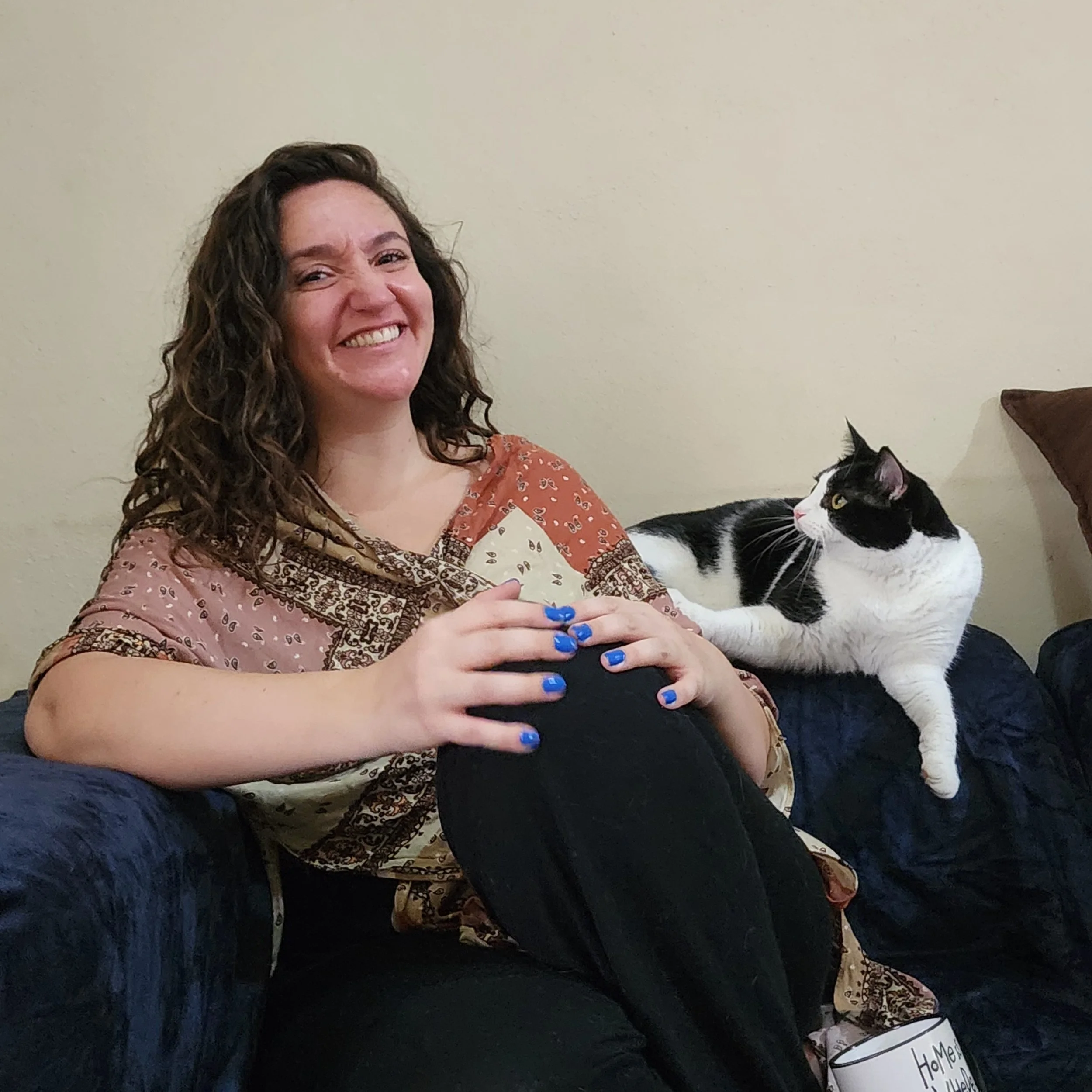
Hi, I'm Carly!
Supporting the Jewish community has become one of my biggest passions. I've been struggling myself with what it's been like to be Jewish in today's world. I've felt the anger, fear, grief, and other challenging emotions that so many of us have been carrying. Through my own journey of getting support, I realized just how hard it can be to find a therapist who truly gets it. I want to be that person for someone else.
When we're together, I want you to have the feeling of working with someone who just... gets it.
I'm honest, engaged, and warm. I'll let you know what I'm thinking and noticing instead of leaving you wondering what's going on in my head. We'll figure it out together. There will probably be laughter too, because I think humor can be a really important part of healing.
Outside of Therapy
Outside of therapy, you'll usually find me hanging out with my two cats, Moo Moo and Magnum, playing board games or video games. When my vertigo decides to cooperate, I love scuba diving in the Pacific Ocean. One of my favorite parts of living in Costa Rica is waking up to the sound of the howler monkeys outside my home and watching the mama monkeys with their babies hanging onto them as they move through the trees. I'm also a huge fan of improv comedy and am still hoping to find, or maybe even start, a group here in Costa Rica.

Education, Credentials,
& Trainings
Master's Degree in Music Therapy
Bachelor's Degree in Psychology
Licensed Professional Counselor (LPC)
Board-Certified Music Therapist (MT-BC)
13+ years of experience across inpatient psychiatry,
crisis intervention, PHP, IOP, outpatient therapy,
group therapy, and private practice.Professional Training: Antisemitism in Emerging Adulthood:
Stress Factors, Understanding Trauma, and Fostering
Resilience in Therapy (Zur Institute)
Therapy FAQs
-
No. This work is for anyone with a Jewish background or identity—whether you're secular, culturally Jewish, questioning, observant, or somewhere in between. You don't need to be religious or practicing. Just be yourself. You're welcome here.
-
Yes. These things often overlap. We can absolutely address Jewish-specific experiences alongside anxiety, people-pleasing, family dynamics, ADHD, HSP sensitivity, or anything else you’re carrying.
-
This is clinical therapy. We can explore Jewish identity, intergenerational trauma, antisemitism, belonging, and resilience through a therapeutic lens—not religious guidance or Jewish education.
-
No. I work with adults from all backgrounds. This page focuses on Jewish clients because experiences like intergenerational trauma, antisemitism, cultural belonging, and "Jewish guilt" are often misunderstood by therapists who don't share that context.
Get Started in 4 Steps
-
Fill out the free consultation form and tell me a little about what’s bringing you to therapy. I’ll get back to you within one business day to schedule a time to talk.
-
This is a chance for us to get to know each other. You can ask any questions you have, tell me a little about what’s been going on, and together we’ll see if we’re a good fit.
-
If we decide to work together, we’ll schedule your first full session. We’ll spend some time getting to know your background, what shaped you, and what’s bringing you to therapy now. From there, we’ll figure out what you want to work on together.
-
From there, every session looks a little different because every week of life is different. Sometimes we’ll process what’s happening right now. Other times we’ll explore patterns that have been with you for years, make sense of experiences that still affect you today, or work toward new goals. We’ll keep building on what we learn together.
You Don’t Have To Do This Alone Anymore
If any of this resonated with you, I'd love to connect.